Sage Reed · 9 October 2026
Trail Work Exposes Bloomridge's Hidden Pre-Settlement History
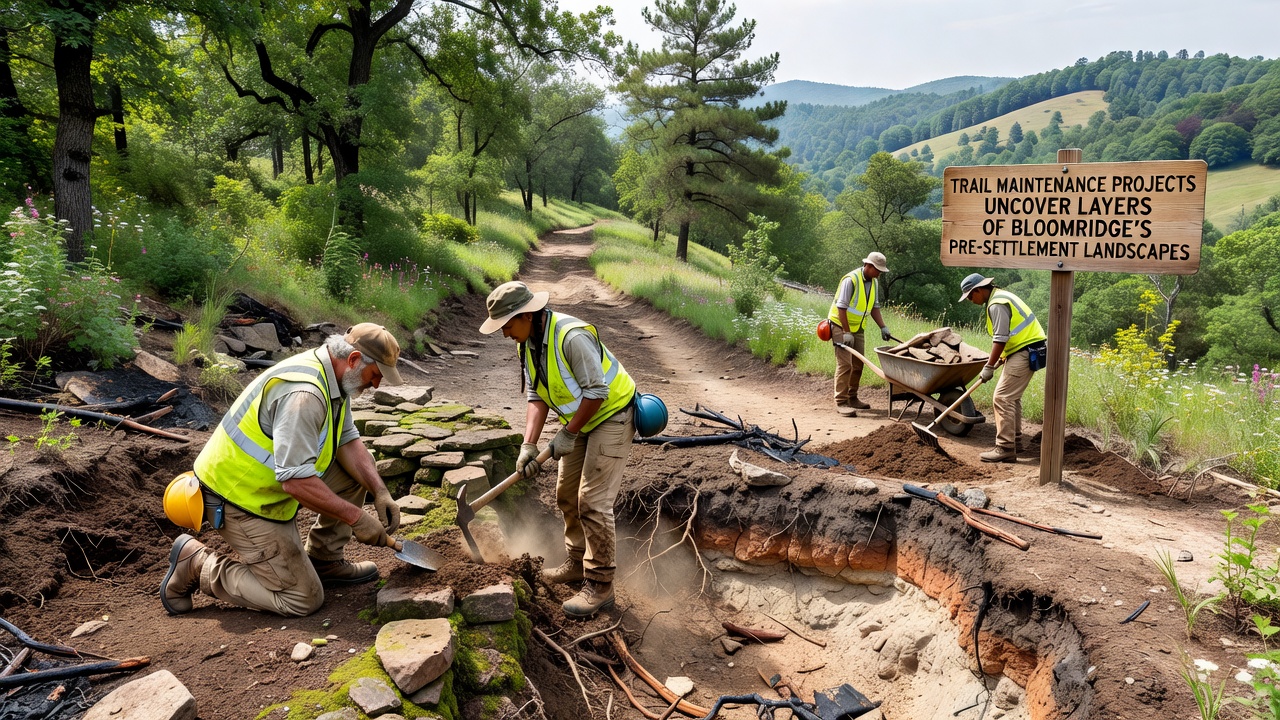
Trail maintenance projects across Bloomridge have brought to light successive layers of landscapes that existed long before European settlement reached the region, and crews working through the summer and into October 2026 continue to document these findings as they repair and reroute paths that cross ridges and valleys. Workers have uncovered compacted soils, charcoal deposits, and plant communities that predate modern agriculture, while local historians and ecologists have joined the effort to record each stratum before construction resumes.
Project Scope and Timeline
Maintenance crews began systematic upgrades on three primary trail corridors in early 2025, focusing first on drainage improvements and erosion control along routes that follow old ridgelines; by October 2026 the work had expanded to include new boardwalk sections and signage, giving crews extended access to subsurface materials that had remained undisturbed for generations. Equipment operators reported striking distinct color changes in the soil profiles, prompting supervisors to pause operations and invite specialists from regional universities to examine the sites before further digging occurred.
Soil Layers and Vegetation Evidence
Excavations revealed multiple horizons of organic material separated by mineral bands that indicate periods of forest regrowth and burning, and pollen samples collected from these layers match species known to have dominated the area prior to widespread clearing. Researchers have identified remnants of tallgrass prairie pockets alongside oak-hickory woodland indicators, showing that the pre-settlement landscape supported a mosaic of open and closed canopy conditions rather than uniform forest cover. Data collected during the October 2026 phase shows elevated charcoal concentrations at depths corresponding to roughly three hundred years ago, consistent with historical accounts of indigenous land management practices that used controlled fire to maintain game habitats and travel corridors.
Artifact Finds and Documentation
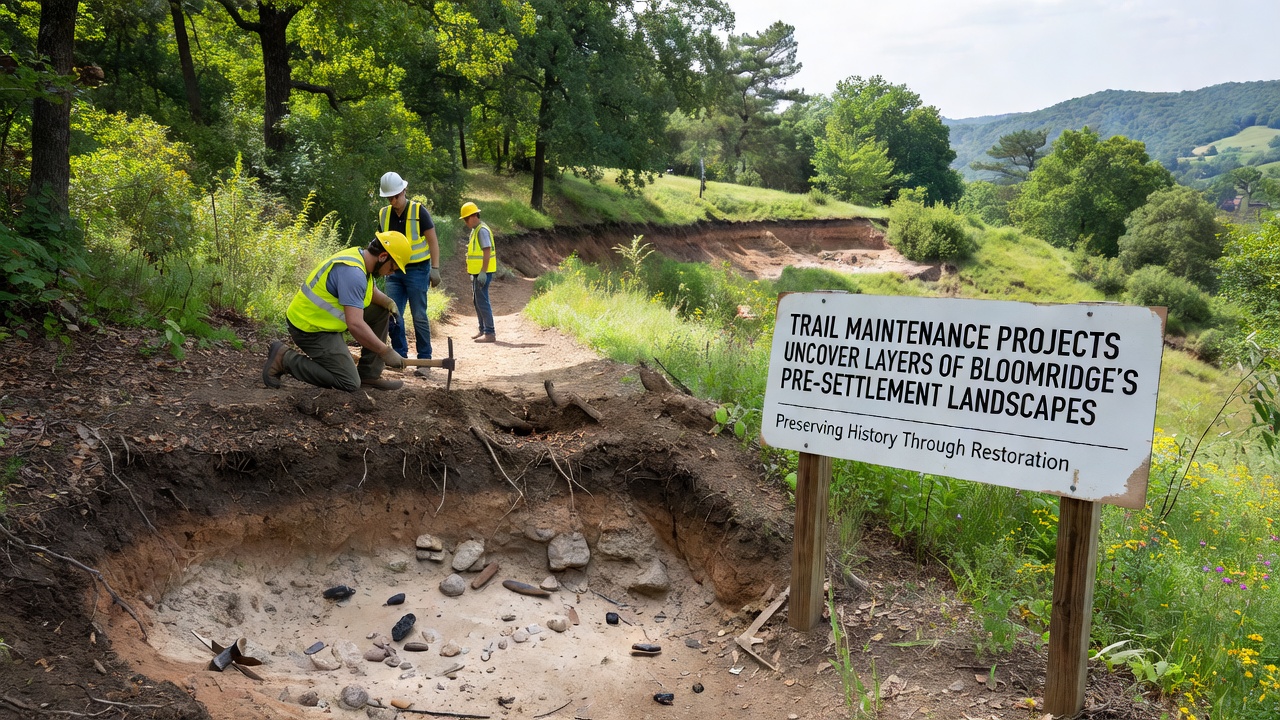
Along one section of the north ridge trail, crews recovered stone flakes and a broken projectile point embedded in a buried A-horizon, while similar finds at lower elevations include fragments of worked bone and pottery sherds that suggest seasonal encampments near former stream channels. All recovered materials have been photographed in situ, mapped with GPS coordinates, and transferred to the Bloomridge Historical Society for cataloging, with copies of field notes shared with the state archaeological office. Observers note that the density of finds increases near natural springs, supporting the view that water sources shaped both pre-settlement travel patterns and later trail alignments.
Scientific Partnerships and Analysis
University teams from neighboring states have conducted radiocarbon dating on selected charcoal samples, yielding preliminary results that place some layers between 1200 and 1600 CE, and these dates align with broader regional chronologies maintained by the National Park Service archaeology program. Soil chemists have also tested pH and nutrient levels across the exposed profiles, revealing higher fertility in the oldest horizons compared with surface soils that have been tilled for more than a century. The combined dataset is being entered into a shared geographic information system that will allow future researchers to model how vegetation shifted after settlement-era logging and farming altered drainage patterns.
Community Response and Ongoing Work
Local residents have attended public meetings to review the finds, and several volunteers have assisted with screening excavated soil for additional micro-artifacts such as seeds and small lithic pieces. School groups have visited stabilized sections of the trails where interpretive panels now explain the sequence of landscape changes, while the October 2026 maintenance schedule includes additional test pits at junctions where multiple historic routes converge. Officials from the county parks department have adjusted project timelines to accommodate extended analysis periods, ensuring that new trail surfaces will not disturb the documented strata.
Conclusion
The trail maintenance projects have produced a growing record of Bloomridge's pre-settlement conditions that integrates soil science, archaeology, and historical ecology, and the work scheduled through the remainder of 2026 is expected to add further samples from previously unexamined segments. Continued coordination between maintenance crews and research partners will help preserve these layers while improving public access to the ridges and valleys where earlier landscapes once existed.